5 Modern Haircuts for Women Over 50 to Try Right Now
The best haircuts for women over 50 balance softness and structure. Fifty is not the time to play it safe with your hair — it’s the time to wear exactly what you love, only better. Modern haircuts for women over 50 are all about soft structure: cuts that lift, move, and flatter without trying too hard. These five ideas, each with five variations, give you 25 fresh looks that feel current, not “age-appropriate.” From chic bobs to soft pixies, every cut here proves style has no expiration date. For the full celebration of 50+ hair, don’t miss our 100 gorgeous hairstyles for women over 50.
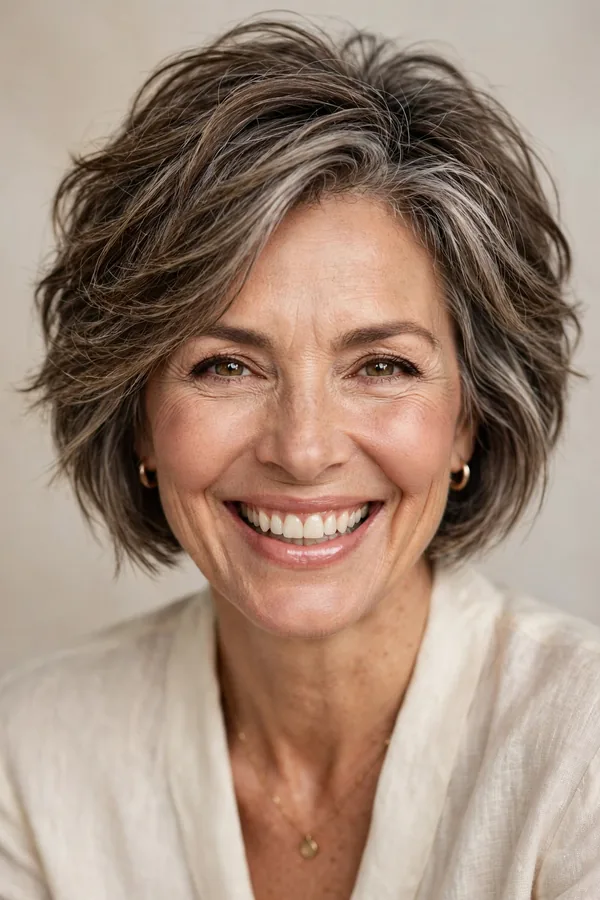
The Modern Over-50 Cut Checklist
- Softness over severity — textured ends beat blunt, harsh lines.
- Face-framing layers lift and brighten — they’re non-negotiable.
- Movement is youth — choose cuts that swing, bounce, or flow.
- Consider your texture’s reality — the best cut works with it, not against it.
- Refresh every 6–8 weeks — grown-out cuts age faster than anything.
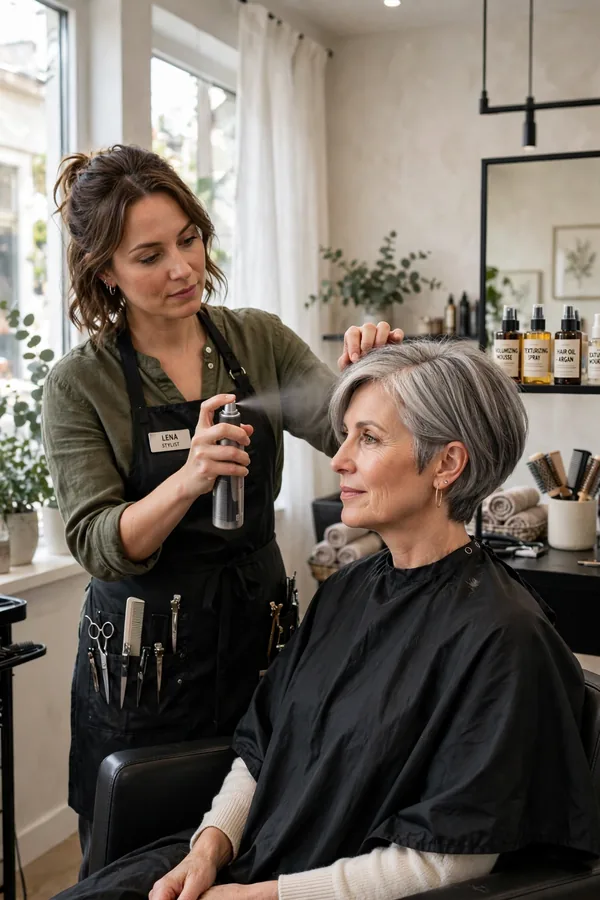
| Idea | Best For | Effort |
|---|---|---|
| Modern Bob | Timeless chic | 10 minutes |
| Soft Pixie | Bold and low-maintenance | 5 minutes |
| Layered Lob | Versatile length | 10 minutes |
| Shaggy Midi | Edgy texture | 10 minutes |
| Curly Crop | Natural texture shine | 10 minutes |
How to Pick Your Modern Cut
Start with your hair’s reality, not the photo. The right modern cut is the one that solves your hair’s actual problem — flatness, bulk, frizz, or a grow-out that has stalled — while fitting the mornings you honestly have. Find your row in the table, start there, and bring one photo of the cut plus one photo of your own hair on a normal day; the gap between the two is the conversation that prevents a disappointing appointment.
| If your hair is… | Pick this first | Why it works |
|---|---|---|
| Fine or thinning, especially at the crown | The Soft Pixie or the Modern Bob | Short length plus textured ends builds volume where fine hair needs it most, and the surface stays smooth so thin hair never looks sparse |
| Thick and heavy | The Shaggy Midi | Choppy layers remove bulk and add separation at the same time, so thick hair swings instead of sitting like a helmet |
| Naturally curly or wavy | The Curly Crop, cut dry | Dry cutting respects each curl’s spring, so the shape rounds instead of triangulating — and curls cropped close need almost no morning effort |
| You want length plus bounce | The Layered Lob | Collarbone length keeps ponytail options open while layers stop the flat, heavy drape that ages a long cut |
| You want the lowest-maintenance cut on the page | The Soft Pixie, air-dried | Wash, scrunch, go — the soft top length keeps it feminine without a styling marathon |
| Your crown is thinning or your hairline is tender | The Modern Bob with soft face-framing | Longer front pieces cover a thinning part line without a scraped-back style, and soft layers never pull — say so out loud, because a good stylist will keep the top layers softer and put the volume lower |
Face shape matters less than density here, but one rule helps: if your face is round, ask for a side part and front pieces that fall past the chin — the Layered Lob with face-framing does this naturally, since the pieces lengthen the face instead of widening it at the cheeks. And if you wear glasses, bring them to the appointment: curtain or side-swept bangs must clear the frames, and a good cut is shaped around the frames, not despite them. Three things worth telling your stylist before a modern cut: where you want the shortest layer to start, whether you want textured ends or a clean line, and how often you will honestly come back for trims — every 6 to 8 weeks keeps a modern cut crisp, and a grown-out cut ages faster than anything on this page.
Idea 1: The Modern Bob
The bob never left — it just got softer, and it remains one of the most versatile haircuts for women over 50. Today’s bobs for women over 50 have textured ends, lived-in movement, and face-framing softness that flatters beautifully. It’s polished without being stiff. Curious which bob suits your texture? The hair type quiz points you to your match.
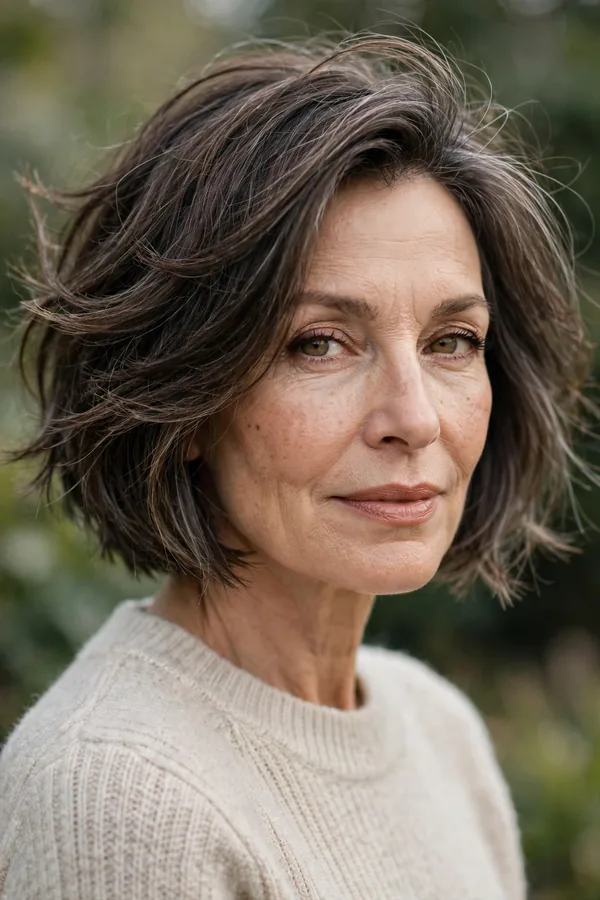
- Textured chin bob: piecey ends, effortless — the modern classic.
- Bob with curtain bangs: soft fringe melts into the cut.
- Wavy bob: loose waves add youthful bounce.
- Asymmetric bob: subtle angle for modern edge.
- Blunt bob with softness: strong line, textured ends — best of both.
Idea 2: The Soft Pixie
The pixie is the ultimate confidence cut among haircuts for women over 50 — and the “soft” version keeps length on top for feminine versatility. It’s wash-and-go, endlessly chic, and spotlights your eyes and cheekbones. For shorter inspiration, our short hairstyles for women over 50 has more.
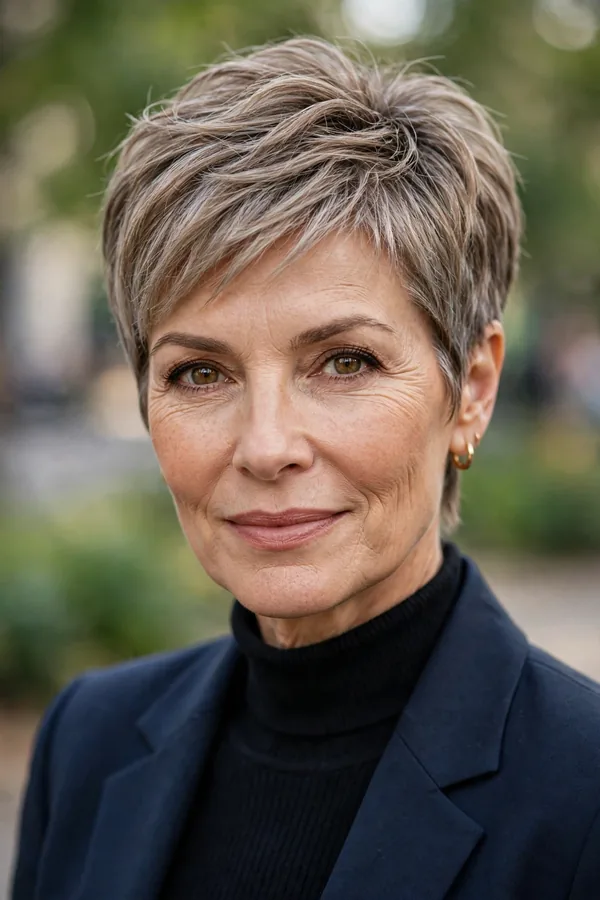
- Long-top pixie: styling versatility with short sides.
- Side-swept pixie: diagonal fringe softens the forehead.
- Textured pixie: piecey and tousled — youthful energy.
- Pixie with undercut: hidden edge, easy grow-out.
- Curly pixie: natural curls cropped close — stunning texture.
Idea 3: The Layered Lob
The lob is the diplomat among haircuts for women over 50 — long enough for ponytails, short enough for bounce. Layers keep it from going flat, and the collarbone length flatters every face shape. Our layered bob hairstyles guide dives deeper into the family.
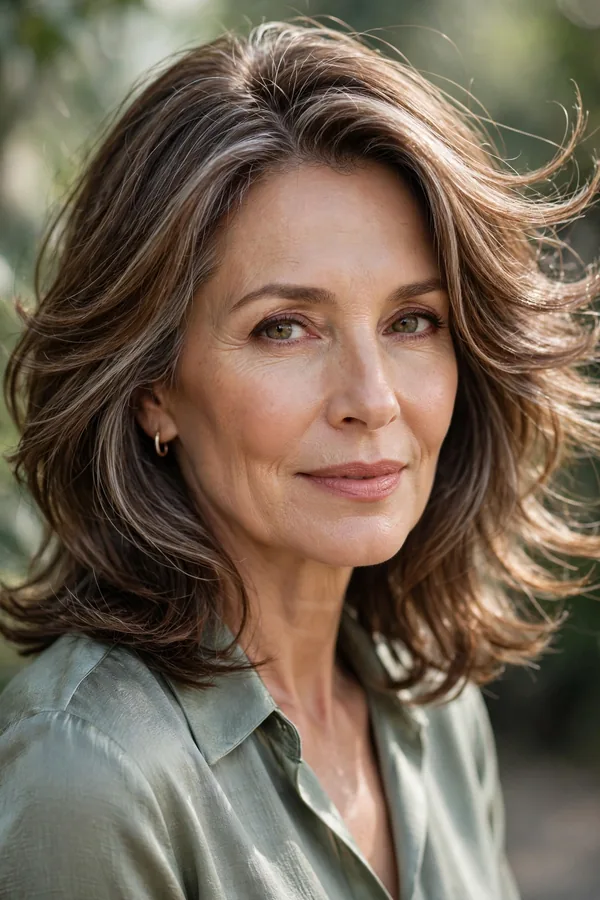
- Classic layered lob: timeless, works on everyone.
- Wavy lob: the most-requested salon look for a reason.
- Lob with face-framing: sculpting pieces around the cheeks.
- Straight sleek lob: minimal and polished.
- Lob with money pieces: bright front pieces lift the whole look.
“The best haircut at 50+ is the one that makes you feel like yourself — only more so.”
Keep exploring: Short Hairstyles Over 50 · Layered Bob Hairstyles · Bob Hairstyles
Idea 4: The Shaggy Midi
The shag is the anti-aging haircut in haircuts for women over 50 — its choppy layers and piecey texture read youthful and effortless at any age. It’s the lowest-maintenance idea here and somehow the coolest. Thinking of a color refresh to match the edge? The hair color matcher finds your shade.
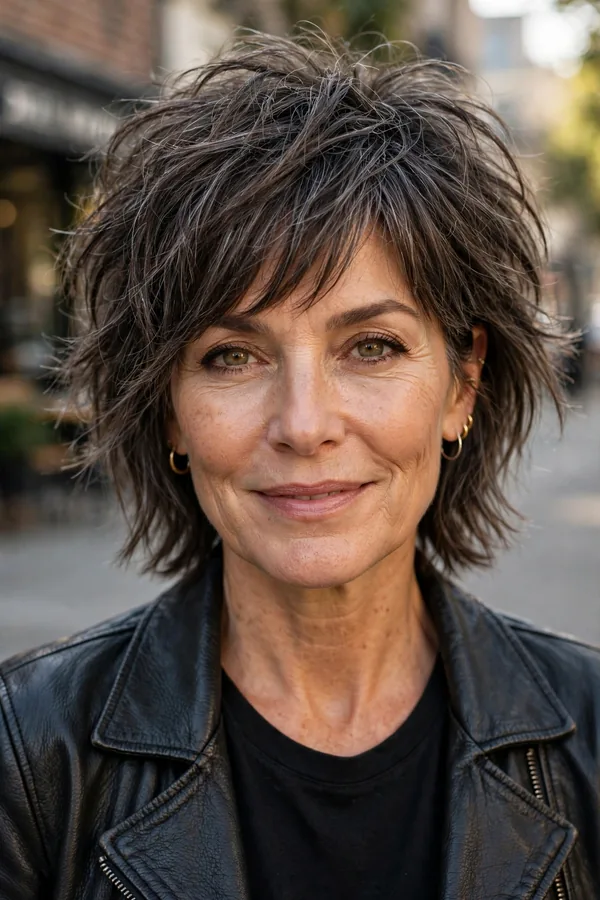
- Classic shaggy midi: feathered layers, lived-in cool.
- Shag with bangs: full fringe + shag — the full retro.
- Wavy shag: enhance natural texture for ease.
- Soft shag: gentler layering for a subtle take.
- Shaggy lob: shorter shag, maximum bounce.
Idea 5: The Curly Crop
Natural curls deserve a cut that celebrates them, making the curly crop one of the most joyful haircuts for women over 50. The curly crop — cut dry, curl by curl — gives ringlets room to spring in a short, manageable shape. It’s joyful, youthful, and full of personality. Growing out curls? The hair growth calculator tracks the journey.
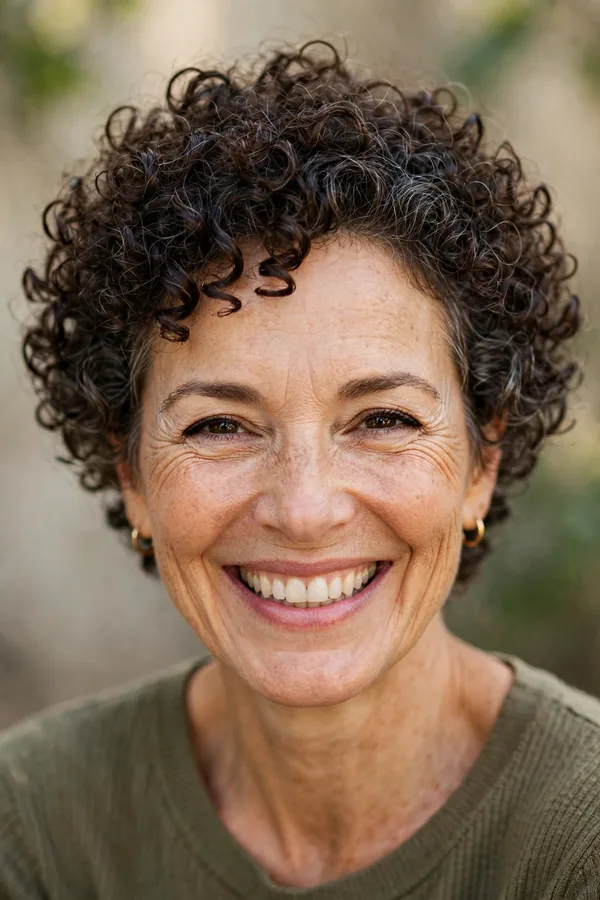
- Rounded curly crop: the classic halo — full of life.
- Tapered curly crop: modern shape, shorter sides.
- Curly pixie: extra-short ringlets — bold and beautiful.
- Curly bob: a little more length, endless bounce.
- Curly shag: texture on texture — maximum personality.
Flatter Your Face Shape
Start with your face shape, not with a trend. These pairings work across changing styles, and your true shape is often easiest to see in a selfie or a mirror. Bring a selfie to your appointment — a few everyday photos show your stylist how your hair falls when you are not posing for it.
- Round — Chin-length bob with a deep side part; avoid centre-parted blunt bobs that widen the cheeks.
- Oval — Textured lob with face-framing layers; avoid overly long one-length hair that drags the face down.
- Square — Soft layers falling past the jawline; avoid blunt cuts ending exactly at the chin.
- Heart — Side-swept bangs with shoulder-length layers; avoid cropped cuts that add width at the forehead.
Work With Your Texture, Not Against It
Your natural texture is the cut’s starting point, not a problem to fix. A cut that fights your texture will always need more styling; one that works with it will fall into place.
- Fine and straight — Layered lob with invisible internal layers; avoid heavy blunt cuts that go flat by noon.
- Natural waves — Shoulder-length cut with long layers; avoid one-length cuts that turn triangular at the ends.
- Curly — Rounded shape with layers at the crown; avoid blunt bobs that puff into a helmet.
- Thick and coarse — Long layers to remove weight; avoid short blunt crops that spring outward.
Add Instant Volume
A cut can build in volume before you pick up a dryer. These four moves give flat or fine hair lift at the root, without a heavier style. Volume lives at the roots, not the ends: flip your head upside down and blow-dry for two minutes — you will get more lift than any volumising spray can give you.
- Stacked layers — Shorter layers at the crown push hair upward; best for pixie to bob.
- Side-part switch — Lifts roots trained flat by a centre part; works at any length.
- Invisible internal layers — Removes weight without visible chops; best for medium to long hair.
- Texturised ends — Stops ends from clinging together; best for bob to lob.
Soften Features and Fine Lines
Softness around the face is what makes a modern cut look youthful after 50. Target the area that bothers you most, rather than changing the whole cut.
- Forehead lines — Wispy side-swept bangs; sweep them, do not plaster them down.
- Jawline — Face-framing layers past the chin; tuck one side behind the ear.
- Neck area — Collarbone-grazing layers; add a loose wave for movement.
- Overall sharpness — Feathered ends throughout; scrunch with cream, never gel.
Colour can do the same job: silver, blonde or warm highlights can brighten the face, while a solid dark shade can make features look sharper — ask your colourist what suits your skin tone.
Keep Maintenance Realistic
A cut only works if you will actually style it. Match the upkeep to your routine, and be honest about how much time you will spend on it each morning.
- Always on the go — Textured pixie or grown-out bob; trim every 6–8 weeks.
- Work, polished daily — Sleek lob with long layers; trim every 8–10 weeks.
- Loves weekend styling — Shoulder-length shag; trim every 10–12 weeks.
- Gym most mornings — Chin-length bob that air-dries; trim every 6 weeks.
How to Choose the Right Hairstyle for Women Over 50
Bring the four checks together before you book: a shape that flatters your face, a cut that works with your texture, upkeep you can live with, and soft edges around your face. The simplest formula is: face-flattering shape plus natural texture plus realistic upkeep plus soft edges — that is the cut that will work for you.
Quick Fixes for Common Hair Frustrations
If a cut is not behaving, the fix is usually small — try these before you book a correction cut.
- Flat by lunchtime — Flip your part to the opposite side and mist the roots for an instant reset.
- Frizzy halo — Smooth a pea-sized amount of serum over the canopy only, never the roots.
- Bangs gone rogue — Re-wet just the fringe and blow-dry it side to side, not straight down.
- Growing-out layers — Pin the shorter pieces back with two crossed bobby pins until the next trim.
- Dull colour between appointments — An at-home gloss treatment buys you three extra weeks.
- Hat hair — Keep a travel dry shampoo handy and lift the roots the moment the hat comes off.
Where You’ll Wear It
Think about where you will actually wear the cut. A versatile style can be dressed up or down, but if most days are one setting, choose for that one.
- Job interview — Sleek lob with polished ends.
- Wedding guest — Shoulder-length waves with soft bangs.
- Gym and errands — Textured pixie that air-dries.
- Date night — Voluminous bob with a deep side part.
- Video calls — Face-framing layers that catch the light.
- Family photos — Chin-length bob with movement.
Haircuts for Women Over 50: FAQ
Should hair get shorter after 50?
Not necessarily — but it should get more strategic. Shorter cuts are lower-maintenance and often more flattering, but a well-cut lob at 55 beats a bad pixie at any age. Choose for your texture and lifestyle.
What haircut makes you look younger?
Softness, movement, and face-framing layers — not any single cut. Avoid severe, scraped-back styles and harsh blunt lines; embrace texture and bounce.
Can I still have bangs over 50?
Absolutely — curtain and side-swept bangs are incredibly flattering at every age. They soften the forehead and spotlight the eyes. The only rule: keep them soft, never severe.
How do I grow out gray gracefully with a new cut?
Choose a cut with built-in grow-out — lobs and shags transition beautifully. And consider that silver can be stunning: see our 100 gorgeous hairstyles for women over 50 for silver inspiration.
How often should I trim?
Every 6–8 weeks for short cuts, 8–10 for lobs. Fresh ends are the cheapest anti-aging treatment hair can get.
What should I actually say to my stylist?
Skip “just make it modern” — it means ten different things to ten stylists. Instead, name three things: where you want the shortest layer to start (crown for height, chin for width), whether you want textured ends or a clean line, and how much time you will spend styling each morning. Those three answers let a stylist choose the layering angle for you — and ask how the cut will grow out, since a modern cut’s grow-out is part of the cut, not an afterthought.
Do modern cuts work with glasses?
Very well, as long as the fringe clears the frames. Curtain bangs that part around the temples sit comfortably with glasses, while a short straight fringe cut to brow level can collide with frames and need constant trimming. Tell your stylist you wear glasses and bring them to the appointment — a good cut is shaped around the frames, not despite them. Keep the sides neat so the frames sit flat.
What if my hair is fine and thin — will a modern cut make it look thinner?
The wrong one can, but the right one does the opposite. Short length plus textured ends builds volume where fine hair needs it, and a soft pixie or textured bob makes thin hair look fuller because the ends are piece-y rather than wispy. Avoid heavy gelled tops that plaster fine hair flat, and skip blunt one-length cuts with no layers — layers are what give fine hair its movement and the illusion of density.
How do I stop a modern cut frizzing in humidity?
Humidity attacks the shortest layers first, so seal them: a pea-sized amount of smoothing cream pressed over the top layer before you step out, and no brushing once the hair is dry. Diffusing curly lengths until fully dry also helps — half-dry curls reabsorb moisture and puff up by midday. On the worst days, a little wax on the piecey ends redefines the texture without restarting the whole style.
How do I grow out a short modern cut without an awkward stage?
Grow-outs go awkward when every layer grows at once, so plan trims, not just growth: keep the back and sides trimmed while the top grows, and the shape stays intentional instead of mushrooming. A lob is the kindest grow-out target — most pixies and bobs pass through it — and soft layers hide the in-between lengths far better than a blunt line. Book the tidy-up every 8 weeks even while growing; skipping trims does not speed growth, it just grows split ends.
How do I know if a short cut will suit me?
Try the ponytail test: if your hair is long, gather it into a high ponytail and see whether a shorter style would suit you. Another good check is a chin-length cut — if it feels right, a shorter cut will probably work for you too.
Your Best Hair Decade Starts Now
Free personalized tools for your hair journey.
💬 Join Our Hair Community
Style Havenly | Hairstyles, Hair Color & Hair Care for Women — share your looks, get ideas, and chat with fellow hair lovers.


3 Comments