25 Gorgeous Braided Hairstyles for Black Women Today
Braids are culture, art, and practicality woven into one — a protective style that can last for weeks while looking incredible every single day. From timeless box braids to intricate fulani patterns, this guide to braided hairstyles for black women covers the classics, the trendsetters, the occasion updos, and the bold short looks, plus exactly how to keep them fresh from install day to take-down. If you want elegant braids made for women over 40, Elegant Braid Hairstyles for Women Over 40 to Try gathers the most polished looks in one place. And for the latest looks, Latest Braid Hairstyles Everyone Is Wearing has the freshest styles to try now.
Shop the Look: Braid Care Kit
Scalp care, moisture, and overnight protection for braided hairstyles.
As an Amazon Associate, StyleHavenly earns from qualifying purchases.
How to Pick Your Braids
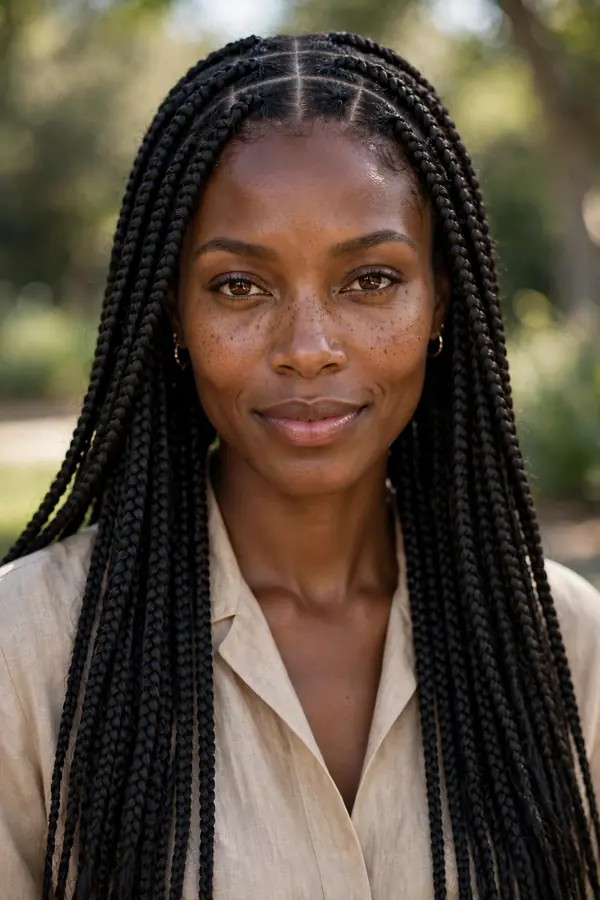
Start with your hair’s truth, not the photo. The right braids solve one problem well — comfort, longevity, edge safety, or a short trial run — and every other choice (length, size, color) follows from that one answer. Find your row first, then pick the style it points to; the occasion table later on the page handles the event, but this table handles the hair.
| If your hair is… | Pick this first | Why it works |
|---|---|---|
| Coily or type 4, and you want low manipulation | Knotless Braids | Feed-in roots mean no tension bumps, and the style lasts 6–8 weeks with your hands out of your hair |
| Fine, thin, or with tender/thinning edges | Short Knotless Bob, or loose Fulani-style braids | Knotless roots and smaller, looser sections protect edges; skip tight stitch cornrows until edges recover, and leave edges out of the style entirely if they are thinning |
| Short natural hair | Braided Bob or Braided TWA | You do not need length for braids — a chin-length bob or mini braids on a TWA give the full braided look on short hair |
| You want the longest wear | Faux Locs or Box Braids | Both run 6–8 weeks with ends tucked away — the true protective stretch, as long as you respect the eight-week maximum |
| You train, swim, or live an active life | Cornrows or Short Braided Bob | Nothing hangs loose to come undone, and both survive sweat and water far better than long, heavy installs |
| You have never had braids before | Knotless Braids | The most comfortable first install — natural-looking roots, no tension headaches, and the easiest take-down if you change your mind |
Before your appointment, tell your braider three things in plain words: the tension you tolerate (“medium tension, no pain — I should be able to raise my eyebrows”), the size you want (small, medium, or jumbo — smaller lasts longer but takes longer to install), and how long you want to keep the style. Those three answers choose the braid for you, and they prevent the two most common regrets: braids so tight they hurt, and braids so heavy they strain your neck. One rule for every texture and every age: if the braids hurt in the chair, they are too tight — edges are precious, and they get less forgiving with time. A style that pulls today costs regrowth months later, so speak up before the first row is finished, not after.
Classic Braids That Never Miss
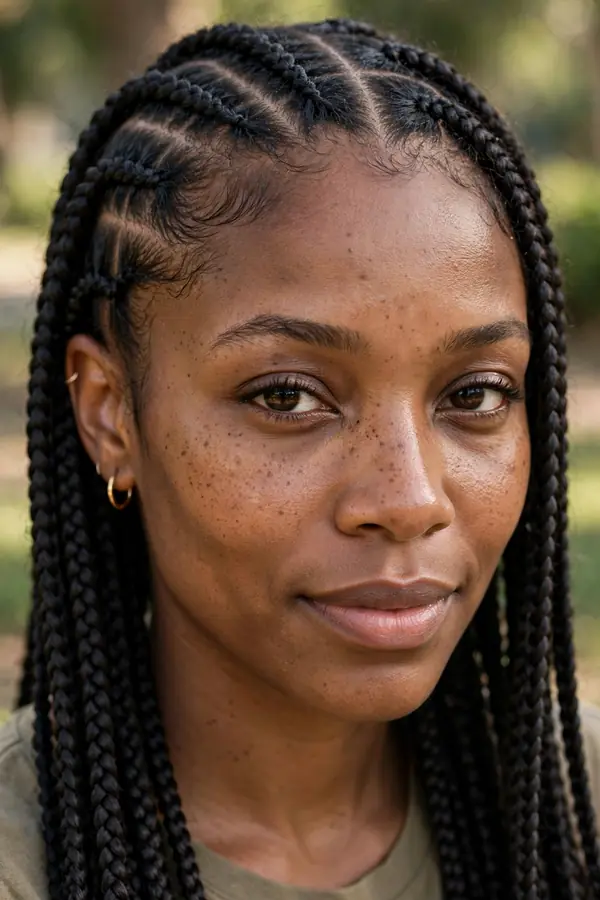
Some styles earn “classic” status because they work on everyone, every time. These seven foundational braided hairstyles for black women are the ones stylists recommend first — versatile, flattering, and endlessly customizable with length, size, and color. If you’re choosing between braid types, consider your lifestyle: knotless for comfort, traditional box braids for longevity. Curious how your natural length will handle extensions? Our hair growth calculator estimates your growth so you can plan installs around your goals. If you want braids made for women over 50, Stunning Braids and Protective Hairstyles for Women Over 50 gathers the most elegant protective styles in one place.
| Hairstyle | Why It’s a Classic |
|---|---|
| Box Braids | The icon — square parts, endless styling options, 6–8 week wear. |
| Knotless Braids | Feed-in technique means no tension bumps and a natural root. |
| Cornrows | Sleek, close-to-scalp braids in endless patterns — 2–4 weeks. |
| Goddess Braids | Thick, raised cornrows with curly ends for a soft finish. |
| Senegalese Twists | Silky rope twists — lightweight with beautiful movement. |
| Marley Twists | Kinky-textured twists that blend seamlessly with natural hair. |
| Feed-In Braids | Gradually added hair creates a natural, tapered hairline. |
Bold note: Braids should never hurt. Pain, bumps, or headaches mean too much tension — speak up during your appointment, because traction damage from tight braids is real and preventable.
Protective Styles with Staying Power
The whole point of protective styling is giving your natural hair a break — and these six braided hairstyles for black women are the marathon runners of the bunch, lasting four to eight weeks with proper care. The key is low manipulation: once installed, your hands stay out of your hair and your ends stay tucked away. For shorter protective options in the same spirit, these short box braids prove you don’t need length for protection.

| Hairstyle | Staying Power |
|---|---|
| Passion Twists | Water-wave twists with a boho finish — 4–6 weeks of wear. |
| Faux Locs | The loc look without commitment — 6–8 weeks, fully protective. |
| Crochet Braids | Quick 2-hour install, endless curl patterns — 4–6 weeks. |
| Tribal Braids | Cornrows flowing into long braids — cultural art, 4–6 weeks. |
| Lemonade Braids | Side-swept cornrows à la Beyoncé — sleek for 3–5 weeks. |
| Stitch Braids | Ultra-precise feed-in lines — the sharpest cornrow look, 3–4 weeks. |
Bold note: Eight weeks is the maximum for any protective style — beyond that, shed hair tangles into knots and take-down becomes damaging instead of protective.
Braided Updos for Every Occasion
Braids don’t just hang — they sculpt. These six braided hairstyles for black women sweep everything up into occasion-ready shapes, from weddings to galas to graduations. The beauty of a braided updo is that the texture does the decorating; you need minimal accessories. Love the beaded fulani look specifically? Our fulani braids guide breaks down patterns, beads, and styling in full detail.

| Hairstyle | Occasion Energy |
|---|---|
| Braided Crown | A halo of braids circling the head — bridal and regal. |
| High Braided Bun | Braids wrapped into a topknot — sleek for galas and offices. |
| Fulani Braids with Beads | Center cornrow + side braids + beads — festival royalty. |
| Braided Ponytail | Sleek pony with a wrapped braid — red-carpet drama. |
| Halo Braid | One continuous Dutch braid around the head — romantic evenings. |
| Side-Swept Cornrow Updo | Cornrows swept into an asymmetric bun — editorial edge. |
Bold note: Book updo installs 2–3 days before the event — fresh braids can look stiff on day one, but they settle into a natural, lived-in finish by day three.
Short and Bold Braided Looks
Who says braids need length? These six braided hairstyles for black women prove short braids hit harder — sharper silhouettes, faster installs, and easier maintenance. Short braided styles are also the smartest entry point if you’re trying braids for the first time. Pair them with a bold lip and let the geometry do the talking. For even more short-braid inspiration, browse our short braided hairstyles for black women collection.

| Hairstyle | The Bold Factor |
|---|---|
| Braided Bob | Chin-length box braids — sharp, swingy, endlessly chic. |
| Short Knotless Bob | Tension-free roots in a face-framing bob shape. |
| Cornrow Pixie | Cornrows carved into pixie patterns — pure artistry. |
| Bantu Knots | Sculptural coiled knots — heritage style, modern edge. |
| Braided TWA | Mini braids on a teeny-weeny afro — cute and protective. |
| Asymmetric Braids | One side braided, one side free — high-fashion contrast. |
Bold note: Short braids grow out faster visually — plan a touch-up or refresh at week three to keep the hairline crisp, even if the style lasts six.
Troubleshooting: Keeping Braids Fresh
Braids are low-maintenance, not no-maintenance. Quick fixes for the most common issues:

- Itchy scalp: Dilute tea tree oil or witch hazel in a spray bottle and mist the scalp — never scratch with anything sharp, which causes sores.
- Frizzy roots at week three: Smooth mousse over the roots and tie down with a satin scarf for 20 minutes — the “scarf method” refreshes the hairline instantly.
- Dry, dull braids: Lightly mist braids with a leave-in spray twice a week. Synthetic hair doesn’t need oil, but your scalp underneath does.
- Edges thinning: Leave edges out of tight styles, massage with oil nightly, and give braids a two-week break between installs.
- Braids too heavy: Ask for fewer packs or a shorter length next time — heavy braids cause neck strain and traction alopecia over time.
- Smell or buildup: Wash braids gently with diluted shampoo in an applicator bottle, focusing on the scalp, then dry completely to prevent mildew.
Which Braids for Which Occasion
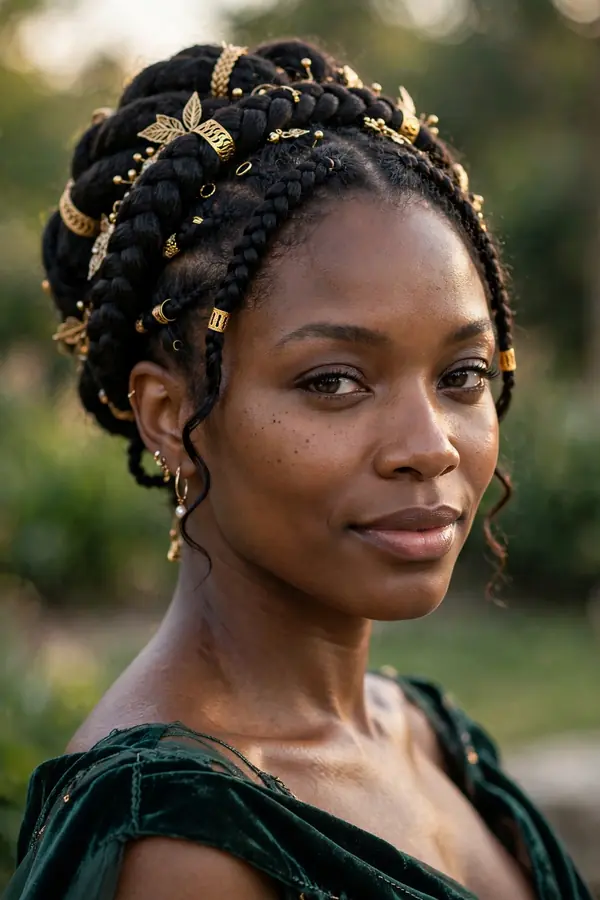
Match your install to your calendar:
| Occasion | Best Braided Pick |
|---|---|
| Work / Office | Knotless braids or stitch cornrows — neat, professional, low-maintenance. |
| Vacation | Box braids or passion twists — swim-friendly and style-proof. |
| Wedding / Formal | Braided crown or high braided bun with accessories. |
| Festival / Party | Fulani braids with beads and cuffs — made for photos. |
| Gym / Active Life | Cornrows or short braided bob — nothing to come undone. |
Braided Hairstyles: FAQ
How long do braids last?
Box braids and knotless: 6–8 weeks. Cornrows: 2–4 weeks. Twists: 4–6 weeks. Never exceed eight weeks — old installs cause matting and breakage at take-down.
Do braids help hair grow?
Braids protect ends from manipulation, which helps you retain length — but growth itself comes from a healthy scalp. Track your real progress with our hair growth calculator between installs.
Can I wash my hair with braids in?
Yes — use diluted shampoo in an applicator bottle on the scalp every 1–2 weeks, rinse well, and dry completely. Damp braids left wet can develop mildew.
Knotless vs. traditional box braids — which is better?
Knotless is gentler on edges and looks more natural at the root; traditional box braids are slightly more durable. For sensitive scalps or fine edges, knotless wins. Compare short options in our short crochet twists guide too.
How do I take braids down safely?
Cut the extension a few inches below your natural ends first, unravel gently with oiled fingers, then detangle in sections before shampooing. Never rush take-down day — patience here saves inches.
Can I swim or work out with braids in?
Yes, with the right style. Cornrows and short braided bobs hold through workouts — nothing escapes mid-session — and a satin-lined cap keeps sweat from frizzing the top. For swimming, a braided style is safer than loose hair, but rinse with fresh water right after, and re-moisturize the scalp and the braids before they dry, since chlorine and salt dry both fast. Dry braids completely after swimming; damp braids left wet can develop mildew.
What should I tell my braider so the braids aren’t too tight?
Skip “not too tight” — it means different things to different braiders. Instead, name three things: that you want knotless (feed-in) roots rather than knotted starts, that you want medium tension, and that you should be able to raise your eyebrows without pulling. If you feel pain during braiding, speak up in the chair — tension headaches and edge loss are not the price of a neat style, and a good braider would rather adjust one row than lose a client.
Are braids safe for fine or thin hair?
They are, if you pick for gentleness rather than weight. Knotless braids and loose, smaller sections protect fine hair, because the roots carry no knots and the weight is spread out. Avoid heavy jumbo braids and tight stitch cornrows that expose the scalp, leave thinning edges out of the style entirely, and give your hair a two-week break between installs. If your edges are already thinning, a short knotless bob is the safest first step.
Can I get braids while transitioning from relaxed to natural?
Braids are one of the best transitioning styles, because they hide the line where relaxed ends meet new growth. Knotless braids or a braided top section camouflage the two textures while the natural hair grows out underneath. Keep heat off the new growth, moisturize the line of demarcation well — that is where transitioning hair breaks first — and do not keep any install past eight weeks while your hair is in this fragile stage.
Which braids should I try first if I have never had them?
Knotless braids. They are the most comfortable first install, the roots look natural from day one, and take-down is gentler than traditional box braids. If you want a shorter trial first, cornrows last 2–4 weeks and let you test whether you like the braided feeling before committing to a 6–8 week install. Either way, start medium-sized — small braids take hours longer to install, and jumbo braids can feel heavy if you are not used to the weight.
Psst… Your Braid Journey Continues Here!
Hair Growth Calculator ·
Hair Color Matcher ·
Hair Type Quiz
100 Gorgeous Hairstyles for Women Over 50
Fulani Braids ·
Short Box Braids ·
Short Braided Hairstyles for Black Women
💬 Join Our Hair Community
Style Havenly | Hairstyles, Hair Color & Hair Care for Women — share your looks, get ideas, and chat with fellow hair lovers.




9 Comments