25 Hottest 2027 Hairstyles for Women Over 40 to Try Now
Looking for 2027 hairstyles for women over 40 that feel fresh but still genuinely flattering? Trends move fast, and after 40 the question is never whether you can wear them — it is how to wear them without looking like you borrowed a haircut from someone half your age. Here is the good news: the 2027 hair landscape is one of the most 40s-friendly in years. The biggest movements right now are softer cuts, smarter color, and styles that work with your texture instead of fighting it.
This is a practical guide, not a lookbook. The 25 hottest looks are organized into 5 trend sections × 5 numbered looks each = 25 total, and every section is built around one real benefit — more volume, softer framing, bolder short cuts, modern polish, healthier color — so you can jump straight to the outcome you actually want. Each section also carries a Try This / Skip This table so you get the trend right on the first salon visit, not the third. For the tried-and-tested favourites behind these trends, Best Hairstyles for Women Over 40 to Try gathers the most flattering looks in one place. And if you want more shoulder-length styles, Shoulder-Length New Looks for Women Over 40 has fresh looks with easy movement. And if you prefer to keep your length, Stunning Long Hairstyles for Women Over 40 to Try has beautiful long looks made for women over 40.
Shop the Look: Trendy Styling Picks
Volume, shine, and gray-coverage helpers for 2027’s trending hairstyles.
As an Amazon Associate, StyleHavenly earns from qualifying purchases.
Start With Your Texture, Not the Trend
One more thing before we start: trends only work when they match your hair’s natural behavior. If you are unsure where your texture falls, the hair type quiz pairs your real texture with the trends below, so you choose from the looks your hair will actually hold.

How to Pick Your 2027 Trend
Five sections, twenty-five looks — but the right one is not the trendiest photo, it is the one your hair will actually hold on a normal morning. Pick by your hair first, then by your patience for upkeep. Find your hair in the table, start with that section, and give it two weeks before judging it — new cuts settle in after a few washes, not on day one.
| If your hair is… | Start with… |
|---|---|
| Fine or thin, and falls flat by midday | The Bob Revival — textured ends and root lift give the illusion of density without weight |
| Thick or heavy, and takes forever to style | Face-Framing Layers — invisible layers remove weight so the cut moves instead of sitting |
| Curly or wavy, and fights straight styles | Face-Framing Layers or the Short Shag — both work with the pattern instead of flat-ironing against it |
| Going gray, or already partly gray | 2027 Color Trends — gloss-first gray blending turns regrowth into dimension instead of a line |
| Short already, or you want the lowest daily styling | Short and Bold — the bixie and textured pixie need finger-styling, not a blowout |
Morning time decides between sections too. If you have five minutes, the bixie, the claw-clip twist, and the low undone bun are your friends. If you enjoy a ten-minute blowout, the soft lob and butterfly layers repay the effort. And if you wear glasses, keep the sides neat so the frames sit flat — a curtain fringe or a tucked asymmetric bob keeps hair off the frames without a daily fight.
Three things worth telling your stylist before you commit: where your cowlicks and natural part sit, because 2027’s soft cuts show them with nowhere to hide; how the cut should look on day three, not just fresh from the chair; and how often you will honestly come back — short cuts need shaping every 4–5 weeks, bobs every 6, and color that grows out gracefully buys you weeks between appointments.
How to Wear the 2027 Bob Revival Without Looking Severe
The bob is the defining cut of 2027, but the versions winning right now are softer than the sharp, severe bobs of the past. Movement at the ends and a little air at the crown keep it modern and friendly on a 40-something face.
1. The Italian Bob. Chin-length with airy, flipped ends — volume without weight. Ask your stylist to keep the perimeter soft rather than razor-sharp.
2. The Soft Lob. A long bob with invisible internal layers. It reads polished at work and tousles beautifully on weekends, the most forgiving entry point into bob territory.
3. The Blunt-But-Broken Bob. A clean perimeter with textured, piecey ends. You get the strong silhouette of a blunt cut without the helmet effect.
4. The Bob with Curtain Fringe. A jaw-length bob paired with a parted, brow-grazing fringe. The fringe softens the forehead and makes the whole cut feel current.
5. The Tucked Asymmetric Bob. One side tucked behind the ear, the other falling free. It is a styling trick, not a cut — instant 2027 energy with zero commitment.
| Try This | Skip This |
|---|---|
| Textured ends that move when you turn your head | A razor-sharp, heavy perimeter with no softness |
| Slight root lift at the crown for height | Flat-ironed, plastered-to-the-head sleekness |
| A side part or curtain fringe to frame the face | A severe center part with zero softness at the front |
| Gloss or shine spray for a healthy finish | Dull, matte ends that make the cut look tired |
Bold note: The 2027 bob lives or dies on the last inch of hair — ask for point-cut or textured ends even on a “blunt” bob, and the cut stays modern for months.

How to Get Face-Framing Layers That Take Years Off, Not Inches Off
Face-framing is 2027’s quiet superpower: the right layers lift the cheekbones, soften the jawline, and add movement — all without sacrificing the length you have spent years growing. The trick is placement: layers that start at the cheekbone or chin, never up at the crown.
6. Butterfly Layers. Short, bouncy layers around the face that blend into long lengths behind. The most requested layering pattern of the year for a reason — it gives the effect of short hair with the security of long.
7. The Money-Piece Frame. Two brighter, face-framing front sections paired with long layers. All the brightness of a full highlight with a fraction of the upkeep.
8. The Long Shag. Choppy, rock-and-roll layers through shoulder-length or longer hair. Surprisingly flattering after 40 when the ends stay healthy — it is texture, not mess.
9. The Face-Frame Lob. A lob where the front layers are cut distinctly shorter than the back. Instant cheekbone emphasis with a cut that still pulls into a ponytail.
10. The Curtain Cascade. Curtain bangs that melt seamlessly into face-framing layers — no visible “bangs line.” It grows out beautifully, which is the whole point.
| Try This | Skip This |
|---|---|
| Layers that start at chin level or below | Short layers starting high at the crown |
| Blended, invisible transitions between lengths | Visible “steps” or shelf-like layers |
| Keeping the ends thick and healthy | Razor-thinning the ends into wispy nothing |
| Face-framing that follows your bone structure | One generic layering pattern for every face |
Bold note: Sit upright in the stylist’s chair when the face-framing is cut — layers cut on a tilted head land in a different place once you stand up.
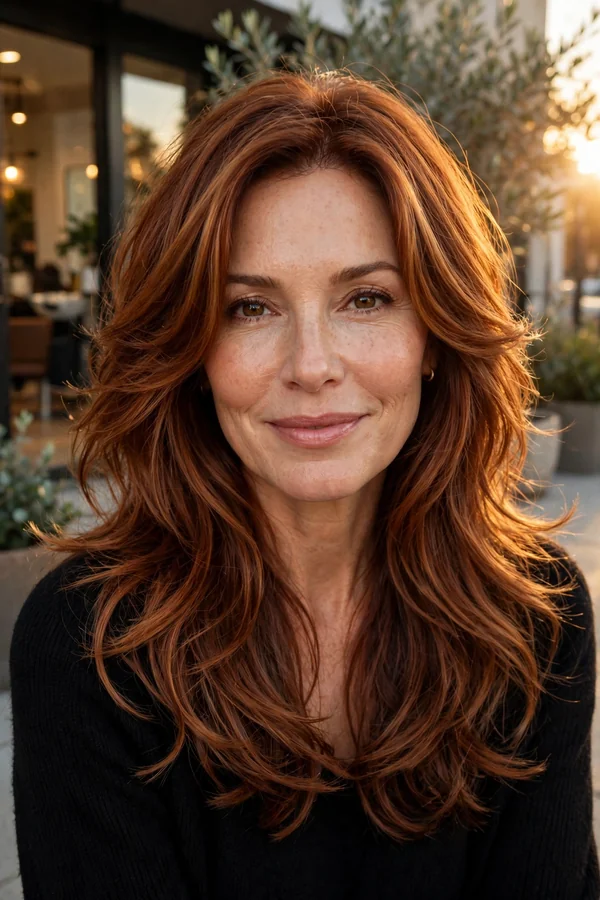
Thinking about adding a brighter frame around your face? Run your skin tone through the hair color matcher first — the right money-piece shade depends more on undertone than on trend.
How to Go Short and Bold Without Regretting It by Friday
Short cuts are having their boldest moment in years, and women in their 40s are leading it — not following. The 2027 rule for going short: keep texture and softness, and the cut reads confident instead of severe.
11. The Textured Pixie. Piecey, finger-styled length on top with softly tapered sides. The anti-helmet pixie — it should look touched, not shellacked.
12. The Bixie (Grown-Out Pixie). The safety net of short cuts: longer than a pixie, shorter than a bob. If you are short-curious but commitment-shy, start here.
13. The Tapered Crop. Clean and sculpted at the nape and sides, with length and movement on top. Striking on strong jawlines and gorgeous with statement earrings.
14. The Short Shag. Choppy layers and a fringe on a chin-grazing cut. Maximum personality, minimum styling — wash, scrunch, go.
15. The Micro-Bob with Texture. Barely longer than a pixie at the back, with soft length around the face. Edgy from behind, flattering from the front.
| Try This | Skip This |
|---|---|
| Soft, piecey texture you can style with fingers | Crispy, over-gelled spikes |
| Keeping some softness around the hairline | Buzzed, harsh edges all the way around |
| A trim every 4–5 weeks to hold the shape | Letting it grow out shapeless for months |
| Bold accessories — earrings, lip color, frames | Hiding a great short cut under zero styling |
Bold note: Short hair shows your face with nowhere to hide — which is exactly why it looks so powerful. Commit to the cut and to the five minutes of styling it deserves.

How to Do Polished Updos That Stay Modern, Not Matronly
2027’s updo trend is “undone on purpose” — styles that look polished from across the room and touchable up close. The difference between modern and matronly is tension: keep it soft at the hairline, secure where it counts.
16. The Low Undone Bun. A loose knot at the nape with face-framing tendrils left free. The tendrils are non-negotiable — they are what keeps it 2027 instead of 1997.
17. The Modern Chignon. A twisted, tucked chignon with visible texture. Think soft and sculptural, not scraped and sprayed.
18. The Twisted Ponytail. A low pony with a twisted or wrapped base. Five extra seconds over a basic ponytail, ten times the polish.
19. The Side-Swept Updo. Everything swept softly to one side and pinned. Asymmetric, romantic, and extremely forgiving on fine hair.
20. The Claw-Clip Twist. The 90s revival done right: a French twist secured with a chic claw clip. Practical, pretty, and genuinely fast on busy mornings.
| Try This | Skip This |
|---|---|
| Soft pieces left out around the face | Every strand scraped back drum-tight |
| Texture spray or light teasing for grip | A full can of hard-hold hairspray |
| The bun or twist sitting low at the nape | A high, severe topknot for formal events |
| U-pins and a modern clip for hold | Visible bobby pins crisscrossed everywhere |
Bold note: Pull the updo gently outward after pinning — a quarter-inch of loosening at the crown is the entire difference between “effortless” and “severe.”

How to Embrace 2027 Color Trends Without Wrecking Your Hair
Color is where 2027 trends are kindest to 40-something hair: the move is toward dimensional, low-damage techniques and gloss-first shine rather than double-process drama. Healthier hair photographs better anyway.
21. Lived-In Balayage. Hand-painted brightness that grows out without a line. The lowest-maintenance blonde or brunette you can get at a salon.
22. Expensive Brunette. Rich, deep brunette with subtle tonal dimension — no stripes, no brass, just depth. The quiet-luxury color of the year.
23. Soft Copper. A muted, wearable copper rather than fire-engine red. Stunning on warm undertones and surprisingly flattering against mature skin.
24. Smoky Blonde. Blonde with a shadowed root and cool, ashy mids. It hides regrowth for weeks and avoids the harsh platinum that can wash out a 40s complexion.
25. Gloss-First Gray Blending. Instead of fighting gray with opaque color, blend it with demi-permanent gloss and fine highlights. Less damage, softer grow-out, and gray becomes an asset.
| Try This | Skip This |
|---|---|
| Demi-permanent color and glosses for shine | Repeated full-head permanent color every 4 weeks |
| Root shadows and melted transitions | Harsh foil lines and chunky highlights |
| Bond-building treatments with every service | Bleaching fragile hair without protection |
| Color chosen for your skin undertone | Copying a celebrity shade that fights your complexion |
Bold note: If your hair is already fragile, choose the gloss-first route — shine reads as “expensive color” from three feet away, damage never does.

Troubleshooting: Trend Mistakes Women Over 40 Keep Making (and the Fix)
- Mistake: Copying the cut but not the styling. The model in the photo had 40 minutes and a stylist. Fix: Ask for the 10-minute version at the appointment and practice it once in the chair.
- Mistake: Ignoring the gray regrowth line. A sharp line of demarcation ages any trend instantly. Fix: Root shadows, gloss blending, or a root touch-up schedule that matches your growth rate.
- Mistake: Over-thinning fine hair. Thinning shears feel like volume in the chair and look like wisps a month later. Fix: Ask for point-cutting or invisible layers instead of thinning.
- Mistake: One-length everything. A single blunt length with no movement reads dated fast. Fix: Even a “blunt” cut needs textured ends or a soft front piece in 2027.
- Mistake: Chasing platinum on fragile hair. Breakage undoes every trend. Fix: Smoky blonde or lived-in balayage gives the brightness with far less damage.
- Mistake: Skipping the fringe test-drive. Full bangs are a commitment. Fix: Start with curtain bangs — they grow into face-framing layers with zero awkward phase.
Where to Wear Each 2027 Trend: Occasion Cheat Sheet
| Occasion | Best 2027 Trend Strategy |
|---|---|
| Office / workday | Soft lob or Italian bob — polished with a 5-minute blowout |
| Wedding guest | Modern chignon or side-swept updo with soft tendrils |
| Date night | Butterfly layers or long shag with bouncy blowout waves |
| Video calls | Face-framing layers and curtain fringe — all the action is at the front |
| Gym / active days | Textured pixie or claw-clip twist — zero fuss, still stylish |
| Weekend errands | Low undone bun or twisted ponytail — 2 minutes, done |
| Formal event | Expensive-brunette gloss + sleek soft bob or polished chignon |
FAQ: 2027 Hair Trends for Women Over 40
Are 2027’s trends actually wearable after 40, or are they all for twenty-somethings?
They are genuinely wearable — this year’s headline trends (soft bobs, face-framing layers, lived-in color, undone updos) were practically designed for mature hair. The key is borrowing the principle, not copying the whole look strand for strand.
Which of these 25 trends is the lowest maintenance?
The bixie and the lived-in balayage tie for first place. The bixie needs only finger-styling, and lived-in color is engineered to grow out gracefully — both buy you weeks between salon visits.
Should I change my color to follow the trends?
Only if your current color is fighting you. A gloss refresh in your existing shade (expensive brunette, smoky blonde) captures the 2027 feel without a dramatic — or damaging — overhaul.
How do I show my stylist what I want without the appointment going sideways?
Bring two photos: one of the cut, one of the everyday styling. And use the stylist scripts in the notes boxes above — naming the technique (“invisible layers,” “root shadow,” “point-cut ends”) prevents most miscommunication.
What if a trend I love doesn’t suit my face shape?
Almost every trend here has a face-shape adaptation: bobs can go chin or collarbone length, fringes can be curtain or side-swept, updos can sit high or low. Ask your stylist for the version built for your bone structure, not the photo’s.
My hair is fine and thin — which 2027 trend suits it best?
The Bob Revival, with textured ends and root lift — it builds the illusion of density without weight. A money-piece frame adds brightness without bulk, and the face-framing layers work too if the ends stay thick. Avoid over-thinning and heavy one-length cuts: thinning shears feel like volume in the chair and look like wisps a month later.
My hair is curly or wavy — do these trends still work?
Yes, with one swap: work with the pattern instead of flat-ironing against it. Face-framing layers, the long shag, and butterfly layers all let curls move, and the short shag is built for wash-and-scrunch mornings. Define on damp hair, diffuse at the roots for lift, and skip razor-thinning — it turns curls into frizz.
I am going gray — should I blend it or cover it?
Blend it, if your hair is already fragile or you hate the regrowth line. Gloss-first gray blending (look 25) uses demi-permanent gloss and fine highlights, so gray becomes dimension instead of a sharp line of demarcation — less damage, softer grow-out, and weeks longer between appointments. Full opaque cover only wins if you want zero gray showing at all.
How do I grow out a short cut without an awkward stage?
Use the bixie as your bridge: keep the nape tapered while the top lengthens, so the shape evolves instead of collapsing. Book reshaping trims every 4–5 weeks — the goal is reshaping, not just shortening — and lean on the claw-clip twist and low undone bun on in-between weeks; both hide uneven stages better than any product.
How often do these trendy cuts need a trim?
Short cuts every four to five weeks, bobs every six to eight, long layers every eight to ten. Once the shape grows out, even the best trend takes twice as long to style — a trim is cheaper than a new styling product, and it is what keeps a 2027 cut looking 2027 instead of last season.
More to Explore
- Hair Growth Calculator — plan grow-outs and trims between trend appointments
- Hair Color Matcher — find the 2027 shades that suit your skin tone
- Hair Type Quiz — match every trend above to your real texture
- 100 Gorgeous Hairstyles for Women Over 50 to Try in 2027 — our mega-collection of timeless, flattering looks
Your 2027 Hair Era Starts Now
Twenty-five trends, zero rules about “acting your age” — just smarter cuts, kinder color, and styles that work as hard as you do. Before your salon visit, take the hair type quiz to shortlist the looks your texture will love, run dream shades through the hair color matcher, and map any grow-out with the hair growth calculator. And when you want the full inspiration vault, our 100 gorgeous hairstyles collection is waiting with a hundred more ideas. New to the bob revival? Here is a quick primer on the classic bob cut — one of the defining 2027 hairstyles for women over 40. Here is to the most confident hair year yet — cheers!

💬 Join Our Hair Community
Style Havenly | Hairstyles, Hair Color & Hair Care for Women — share your looks, get ideas, and chat with fellow hair lovers.


2 Comments