22 Medium Haircuts That Thicken Fine Hair Instantly
This post contains affiliate links. As an Amazon Associate, I earn from qualifying purchases.
Fine hair does not need more hair — it needs a smarter shape. The right medium cut stacks weight where it shows, removes it where it drags, and lets air and light do the rest. Below are 22 medium length haircuts for thin fine hair, organized by the five benefits that actually create the illusion of thickness, plus troubleshooting, an occasion chart, and an FAQ. First, know your texture with our hair type quiz so your stylist can place the layers exactly where your hair needs them.
Layers That Build Instant Volume


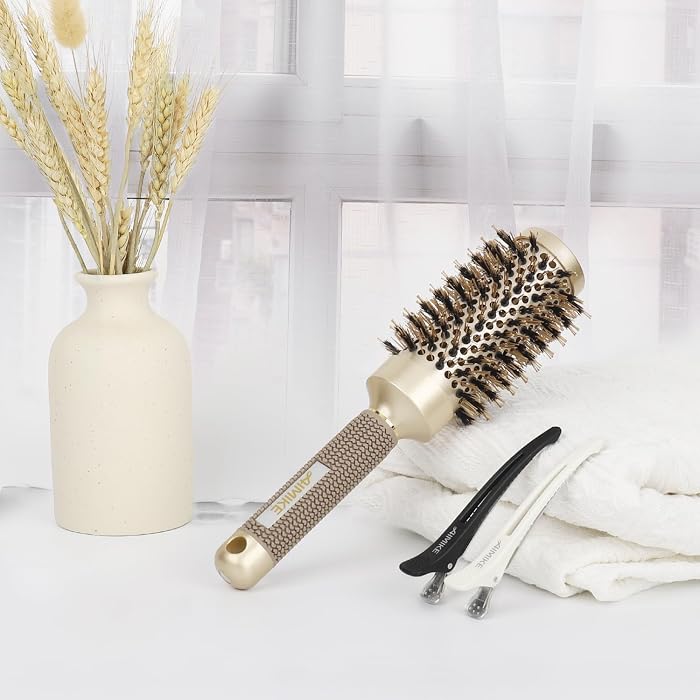
Layers are the fastest volume tool for fine hair — but only when they are placed high and kept long. Short, choppy layers throughout thin hair can remove the very weight that makes it look full, while two or three well-placed layers through the crown and sides lift the roots and let the lengths swing. Ask for long layers starting at the cheekbone rather than layers cut all the way up, and keep the bottom two inches one solid length so the ends still look thick. Blow-dry the crown with a round brush for lift that lasts all day. For more layering ideas, see our guide to layering thin hair after 50.
| Layer Style | Volume Effect |
|---|---|
| Long crown layers | Lifts roots, keeps ends thick |
| Face-framing layers | Movement without losing density |
| Short all-over layers | Can thin fine hair out — avoid |
| Invisible internal layers | Hidden lift under the top layer |
Bold note: Never let a stylist razor-cut fine hair all over. Razoring frays the ends and makes thin hair look wispy — scissors only, except for a few soft textured pieces.
Blunt Ends That Make Hair Look Twice as Thick

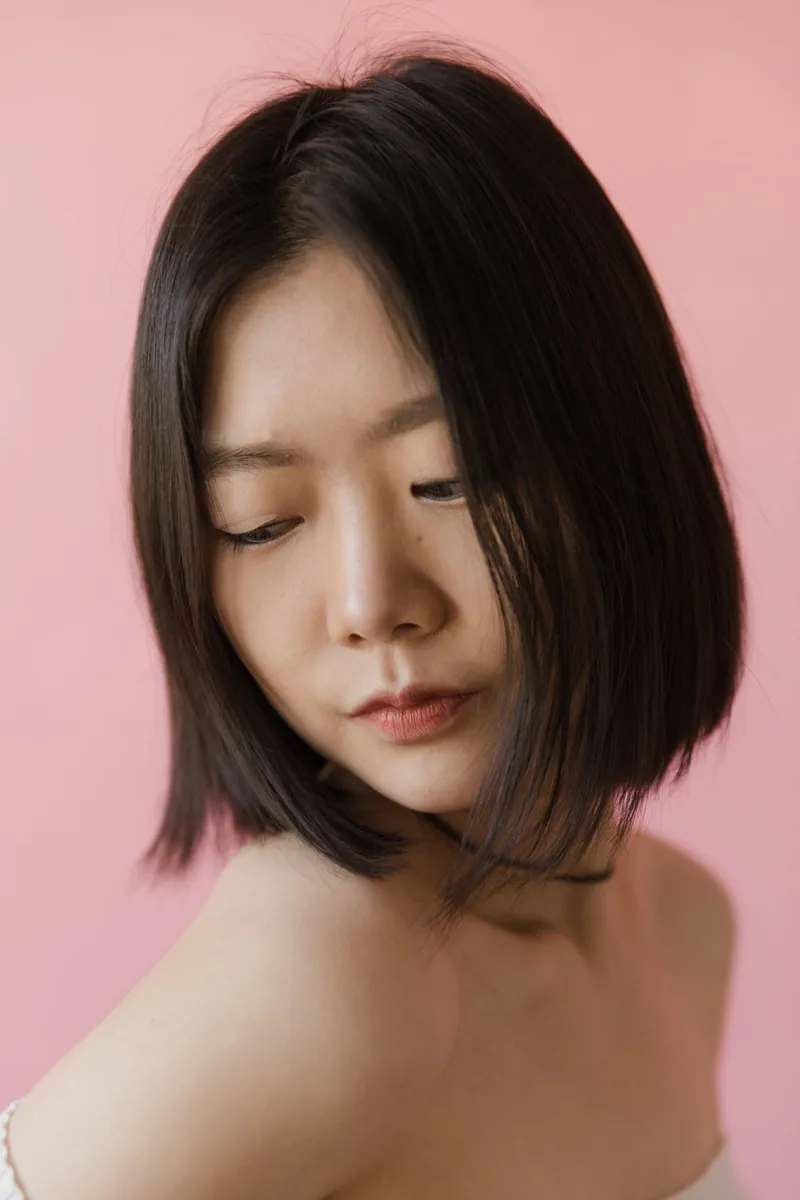
A blunt perimeter is the oldest trick in the book for a reason: when every hair ends at the same line, the eye reads one solid, dense edge instead of straggly wisps. The blunt lob — collarbone to shoulder length, cut straight across — is the single most thickening cut for fine hair. Keep the length at or above the collarbone so gravity does not pull the volume out, and ask for a barely-there undercut of layers underneath if you want movement without touching the outline. Trim every six to eight weeks to keep that crisp edge. Thinking about a new shade to go with the cut? Our hair color matcher finds tones that add depth to fine hair.
| Cut | Why It Thickens |
|---|---|
| Blunt lob | One solid edge reads as maximum density |
| Blunt bob | Shorter length stacks weight at the ends |
| Feathered ends | Softens the edge but thins the look |
| V-shaped ends | Tapers the perimeter — the opposite of thick |
Bold note: The blunt edge is the whole trick — do not let it be “softened” away. If your stylist starts feathering the perimeter, ask them to stop and keep the line clean.
Face-Framing Layers That Add Movement Without Losing Density


Face-framing layers give fine hair the swing and softness of a layered cut while leaving the back and sides full. Because only the front sections are layered — starting at the cheekbone or jaw — the perimeter stays dense and the face gets all the movement. Start the shortest face-framing piece at the cheekbone for the most flattering sweep, and blend it into the lengths so there is no harsh step. Curl the front pieces away from the face for a polished, bouncy finish. For medium styles with fringe options, see our medium hairstyles with bangs.
| Framing Style | Best For |
|---|---|
| Cheekbone layers | Round and square faces |
| Jaw-length layers | Long and oval faces |
| Curtain bangs + layers | Softening a high forehead |
| Side-swept fringe | Adding width at the temples |
Bold note: Face-framing layers should start no higher than the cheekbone on fine hair. Shorter front layers expose the scalp line and make the sides look thinner.
Textured Ends and Internal Layers That Fake Fullness

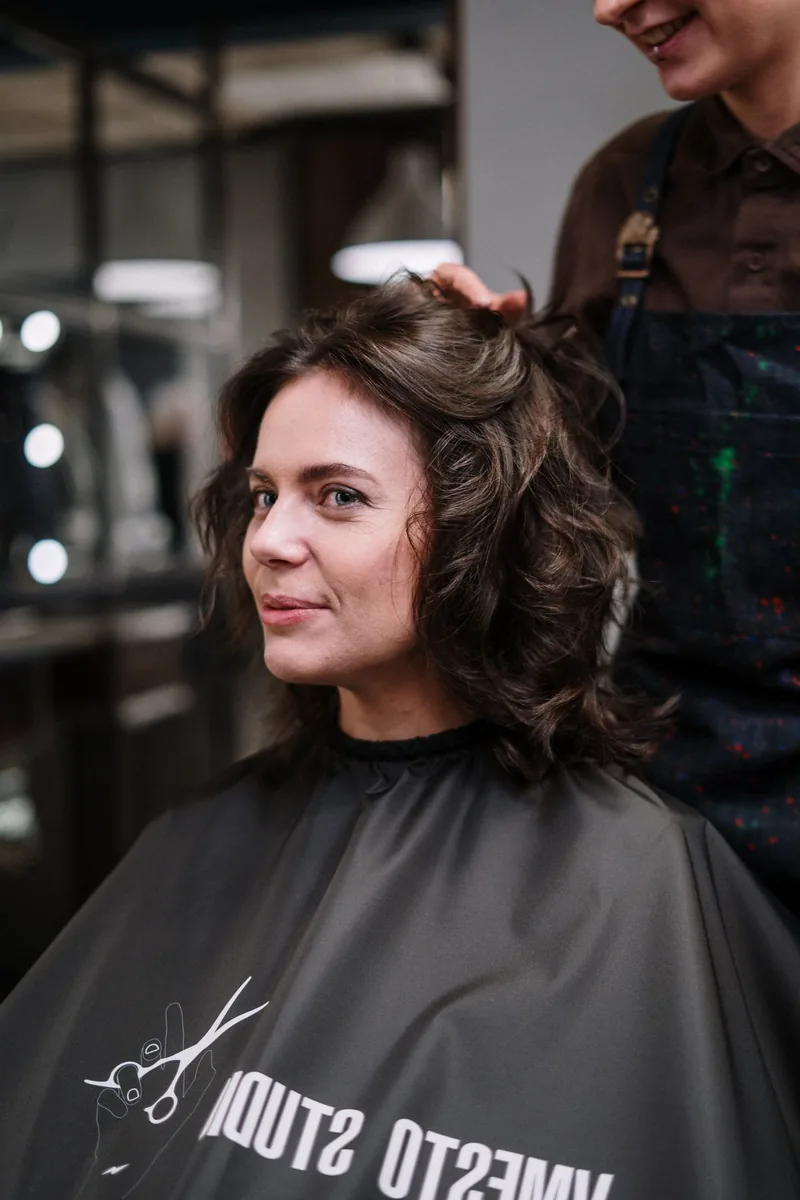
Texture is how fine hair fakes fullness: piecey, separated ends catch the light in different directions, so the eye sees depth and volume instead of a flat sheet. The trick is keeping the texture shallow — point-cutting just the last inch, or invisible internal layers hidden beneath a solid top layer. Ask for point-cutting on the last inch only to keep the perimeter looking full, and use a pea-sized amount of texturizing paste on dry ends to separate the pieces. Scrunch, do not comb, after styling so the texture stays. A medium shag with soft internal layers is the best version of this idea for fine hair.
| Texture Technique | Fullness Effect |
|---|---|
| Point-cut ends | Soft, separated ends with a full outline |
| Invisible internal layers | Hidden lift, surface stays smooth |
| Soft shag texture | Airy volume with piecey movement |
| Heavy razoring | Thins fine hair — avoid |
Bold note: Texture should be felt, not seen. If the ends look stringy or see-through, the texture went too deep — a blunt trim restores the edge in one visit.
Bangs and Crown Volume That Lift Fine Hair


Volume at the crown changes the whole silhouette: when the top lifts, the sides stop looking flat and the entire cut reads thicker. Curtain bangs help twice over — they bring weight forward around the face and hide a thin hairline. Ask for stacked layers at the crown to build height without teasing, and keep bangs light and piecey so they do not steal density from the rest of the cut. Blow-dry the crown in the opposite direction of how it naturally falls, then flip it back for instant lift. If you are growing your hair out between cuts, our hair growth calculator maps the timeline.
| Volume Booster | How It Works |
|---|---|
| Stacked crown layers | Shorter layers push the top up |
| Curtain bangs | Weight forward, fuller hairline |
| Deep side part | Sweeps hair over the thin side |
| Root-lifting spray | Holds the lift all day |
Bold note: A deep side part is free volume. Flip your part to the opposite side on wash day and the roots stand up instead of lying flat.
Troubleshooting: Fine-Hair Problems, Fixed
Even the best cut can fall flat without the right habits. Here is how medium length haircuts for thin fine hair stay full between salon visits:
- Flat by midday: flip your part to the other side and mist root-lifting spray at the crown — the roots reset instead of re-flattening.
- Ends look stringy: book a blunt micro-trim of half an inch; it restores the solid edge without losing length.
- Greasy roots, dry ends: dry shampoo on the roots only, never the lengths — powder on the ends makes fine hair look dull and wispy.
- Layers fell out: layers on fine hair need a trim every 6–8 weeks; past that, the shape collapses and the cut looks one-length and limp.
- Static and flyaways: a drop of smoothing serum on the ends only — serum on the roots kills volume instantly.
- Hat hair: carry a travel-size dry shampoo; a quick shake at the roots after removing a hat brings the crown back.
Which Cut for Which Day
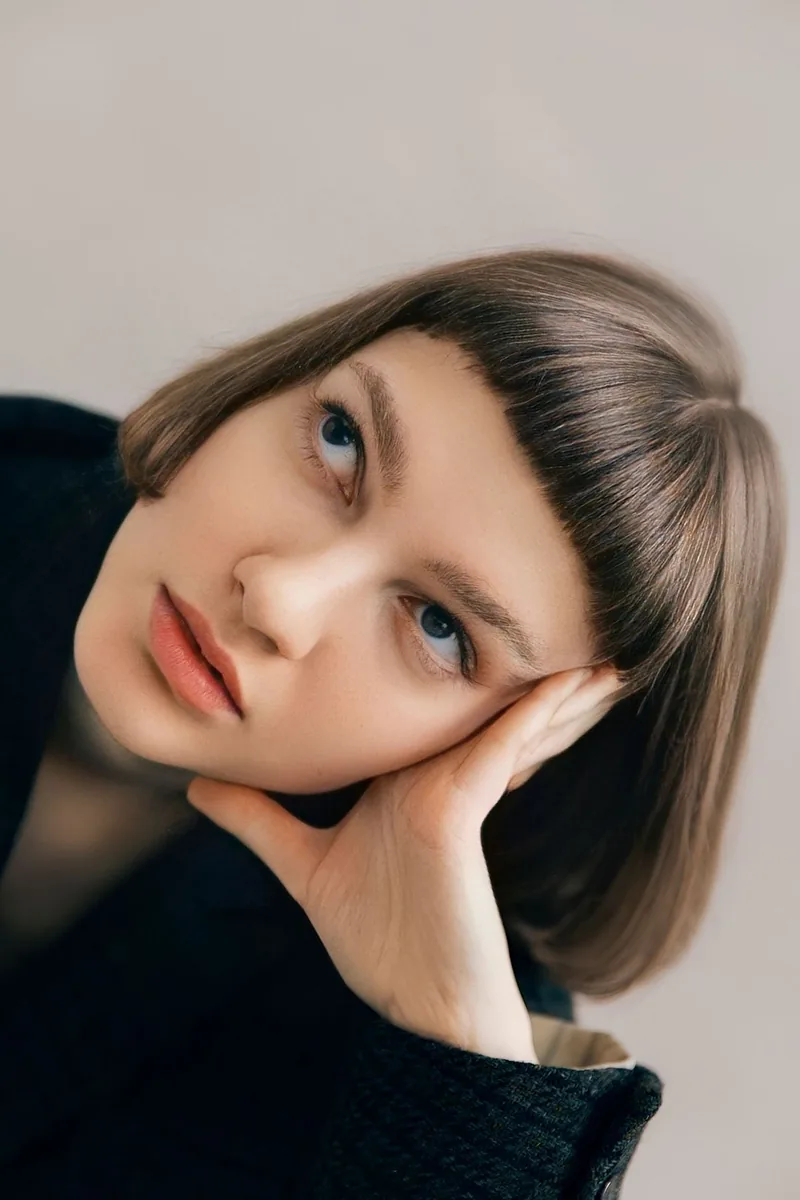
Match the cut to the occasion:
| Occasion | Best Cut Pick |
|---|---|
| Everyday / work | Blunt lob — polished with zero effort |
| Wedding / formal event | Face-framing layers + curtain bangs — soft and elegant |
| Photos / portraits | Layered lob with crown volume — depth on camera |
| Casual weekend | Soft textured shag — airy and carefree |
| Growing hair out | Long layers + blunt ends — full while it grows |
Medium Haircuts for Fine Hair: FAQ

What is the best medium length haircut for thin fine hair?
The blunt lob with long crown layers. The blunt edge reads as maximum density, the crown layers add lift, and the medium length keeps enough weight for the ends to look thick.
Do layers make fine hair look thinner?
Short, choppy layers all over can — they remove weight. Long layers, face-framing layers, and invisible internal layers add volume without thinning, because they leave the perimeter and the ends full.
Should fine hair be cut wet or dry?
Dry cutting is ideal for fine hair. Wet hair stretches and looks longer, so a wet cut can end up shorter and thinner than planned. A dry cut shows the true fall and density.
How often should fine hair be trimmed?
Every 6–8 weeks. Fine hair shows split ends and a ragged perimeter faster than thick hair, and a fresh blunt edge is the cheapest volume boost there is.
Can fine hair pull off bangs?
Yes — curtain bangs and a light side-swept fringe are the safest choices. They add fullness around the face without removing much density. For more inspiration at every age, browse our 100 gorgeous hairstyles for women over 50. For more medium-length ideas, see our medium-length hairstyles for older women.
Love Your Hair Again — Start With a Free Tool
Find your texture, your shade, and your grow-out plan before your next salon visit.
💬 Join Our Hair Community
Style Havenly | Hairstyles, Hair Color & Hair Care for Women — share your looks, get ideas, and chat with fellow hair lovers.


