
24 Cool Short Shag Hairstyles Women Are Loving Now
The shag never really left — it just got cooler. Today’s short shag is all about lived-in texture, face-framing layers, and that effortless “I woke up like this” energy. This guide gives you 6 core shag ideas, each with 4 variations (24 looks total). The philosophy: borrow the principle, don’t copy the whole look — take the layering logic, the fringe attitude, or the texture trick, and make it yours. And for a shorter, bouncier take, Short Shaggy Bob Hairstyles for Chic Movement Magic shows bob-length shags full of movement.
✅ The Shag Checklist — Does It Suit You?
- You have natural wave or curl — the shag’s layering was practically invented for texture.
- You want volume without teasing — short layers create lift structurally, not artificially.
- You like low-effort styling — a shag looks better slightly undone.
- You are okay with frequent trims — layers grow out shaggy-fast (pun intended); plan every 6–8 weeks.
- You want face-framing softness — curtain layers around the face flatter almost everyone.
Shag Ideas at a Glance
| Idea | Best For | Effort |
|---|---|---|
| Classic ’70s Shag | Medium texture, oval faces | Low |
| Modern Soft Shag | Fine hair, first-time shaggers | Very low |
| Curly Shag | Type 3–4 curls | Low |
| Shaggy Pixie (Bixie) | Bold personalities | Medium |
| Shag with Curtain Bangs | Longer foreheads, round faces | Medium |
| Edgy Razor Shag | Thick hair, statement seekers | Medium |
How to Pick Your Short Shag
Start with your hair, not the photo. The right short shag is the one whose layers solve your hair’s actual problem — flatness, bulk, frizz, or a grow-out that has stalled. Find your row in the table, start there, and do a trial run before the real appointment — a shag’s layers are easy to love and annoying to undo.
| If your hair is… | Pick this first | Why it works |
|---|---|---|
| Fine or thinning, especially at the crown | The Modern Soft Shag | Invisible internal layers build volume underneath while the surface stays smooth, so fine hair looks fuller without losing density |
| Thick and heavy | The Edgy Razor Shag | Razor texture removes bulk and adds separation at the same time, so thick hair swings instead of sitting like a helmet |
| Naturally curly or wavy | The Curly Shag, cut dry | Dry cutting respects each curl’s spring, so layers round the shape instead of triangulating it |
| Going gray or growing out color | The Modern Soft Shag, or the Classic ’70s Shag with soft feathering | Longer, softer layers blend the grow-out line, and face-framing pieces soften the transition while color catches up |
| Short on morning time | The Modern Soft Shag, air-dried | Curl cream and air-drying do the work; this is the wash-and-go shag on the page |
| You want a statement, not a safe cut | The Shaggy Pixie (Bixie) or the Edgy Razor Shag | Short length plus choppy, piecy texture does the talking — no styling marathon required |
Face shape matters less than density here, but one rule helps: if your face is round, ask for a side part and longer front pieces — the Shag with Curtain Bangs does this naturally, since the bangs ARE the first layer and they lengthen the face instead of widening it at the cheeks. And if your hair is thinning at the crown after 50, say so out loud — a good stylist will keep the top layers softer and put the volume lower, so the cut flatters the hair you have rather than pretending it is the hair you had at 30. Bring one photo of the cut and one photo of your own hair on a normal day; the gap between the two is the conversation that prevents a disappointing appointment. Three things worth telling your stylist before a shag: where you want the shortest layer to start, whether you want razor texture or scissor layers, and how often you will honestly come back for trims — every 6 to 8 weeks keeps a shag crisp, and a shag left to grow turns into a different (also cute) style.
Idea 1: The Classic ’70s Shag

Feathered layers, flipped ends, rock-star attitude. The original shag borrowed its movement from layered wings — the principle to steal is outward-flicked ends, which you can recreate with a round brush in minutes.
- Variation A — Full Feather: heavy feathering from the crown down, flipped outward all around.
- Variation B — Soft Wing: just the face-framing pieces flicked out; the rest falls naturally.
- Variation C — Tousled Rock: feathering plus texturizing spray for a slept-in finish.
- Variation D — Polished Retro: feathering smoothed with a round brush for a sleeker take.
Idea 2: The Modern Soft Shag

All the movement, none of the mullet. The modern shag keeps layers internal and ends soft — the principle is invisible layering: ask your stylist to layer inside the haircut so the surface stays smooth while the volume builds underneath.
- Variation A — Air-Dried Soft: invisible layers + curl cream, zero heat styling.
- Variation B — Office Soft: same cut, blow-dried smooth for weekday polish.
- Variation C — Blonde Dimension: soft shag + balayage to make every layer visible.
- Variation D — Grown-Out Soft: let it grow 2 months — the layers cascade beautifully.
Idea 3: The Curly Shag

Curls + shag layers = a match made in heaven. Dry-cutting in curl-by-curl layers prevents the dreaded triangle shape. The principle to borrow: shorter layers on top, longer underneath creates the rounded silhouette curls love. Confirm your curl pattern with the hair type quiz before booking the cut.
- Variation A — Defined Coil Shag: gel-cast curls with layered shape, scrunched out when dry.
- Variation B — Big Curly Shag: picked-out roots for maximum volume and drama.
- Variation C — Curly Shag with Bangs: short curly fringe completing the silhouette.
- Variation D — Pineapple-Ready Shag: layers long enough to gather — the ultimate wash-day cut.
💕 You May Also Love
More short-layered looks to explore:
- ✂️ Short Shaggy Haircuts — the shag’s closest cousins
- 🐺 Wolf Cut Hairstyles — the shag’s wilder sibling
- 💇♀️ Choppy Bob Hairstyles — choppy texture, bob length
Idea 4: The Shaggy Pixie (Bixie)

Half pixie, half bob, all shag. The bixie takes shag layering down to pixie lengths — the principle is texture over length: choppy, piecey ends do all the talking so the short length never looks severe.
- Variation A — Piecey Bixie: wax-separated pieces for definition.
- Variation B — Sleek Bixie: same cut smoothed flat — two looks, one haircut.
- Variation C — Bixie with Micro-Fringe: baby bangs up the edge factor.
- Variation D — Grown-Out Bixie: let it grow into a full shag — the transition is seamless.
Idea 5: The Shag with Curtain Bangs

Curtain bangs and shag layers were made for each other — both live in that soft, face-framing world. The principle: the bangs ARE the first layer, blending straight into the shag so nothing looks disconnected.
- Variation A — Long Curtain: cheekbone-grazing bangs melting into layers.
- Variation B — Short Curtain: brow-skimming bangs for a bolder frame.
- Variation C — Curtain + Highlights: face-framing color on the curtain pieces.
- Variation D — Curtain + Updo: pull the shag back, leave curtains out — instant elegance.
Idea 6: The Edgy Razor Shag

Razor-cut ends give the shag its sharpest, most piecey finish — ideal for thick hair that needs weight removed. The principle: razor texture removes bulk and adds separation simultaneously. Thinking of going bolder with color? Test shades first with the hair color matcher.
- Variation A — Full Razor: every layer razor-cut for maximum separation.
- Variation B — Razor Ends Only: scissor layers with razored tips — texture without the commitment.
- Variation C — Razor Shag + Undercut: hidden undercut removes bulk underneath.
- Variation D — Colored Razor Shag: vivid color on razor texture — each piece catches light differently.

Short Shag Hairstyles FAQ
Will a shag work on straight hair?
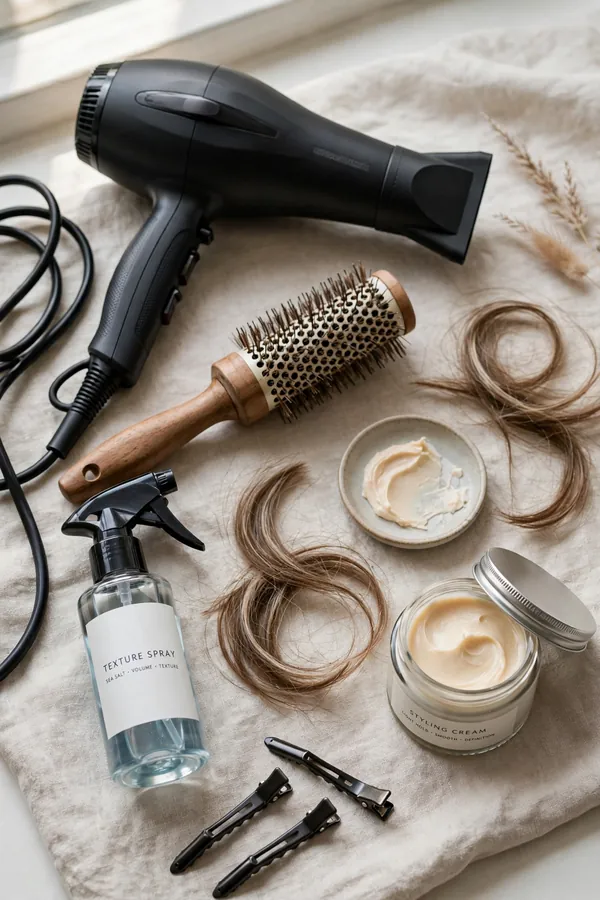
Yes — but it needs styling help. Texturizing spray and a diffuser create the movement straight hair lacks naturally. The hair type quiz will tell you exactly what your texture needs.
How often does a shag need trimming?
Every 6–8 weeks to keep layers crisp. Letting it grow longer turns it into a different (also cute) style — just a shaggier one.
Is the shag high maintenance?
Surprisingly no — it is designed to look better messy. Wash, scrunch in product, go. That is the whole routine.
Can I get a shag if I’m growing out a pixie?
Absolutely — the shag is the ideal pixie grow-out. Use the hair growth calculator to plan your length milestones, and consider a fresh shade via the hair color matcher to celebrate the transition.
Does a shag suit women over 50?
Beautifully — the soft layers lift the face and add youthful movement. See our pillar guide 100 gorgeous hairstyles for women over 50 for more age-defying cuts.
Will a shag suit a round face?
Yes, with two adjustments: a side part instead of a center part, and front layers that fall past the chin rather than ending at the cheek. Both draw the eye downward and keep the cut from adding width where a round face is already widest. The Shag with Curtain Bangs is the safest starting point, since its bangs blend straight into the layers and lengthen the face.
Can a shag help blend gray grow-out?
It can. Longer, softer layers break up the harsh line where color ends and natural gray begins, so the grow-out reads as intentional dimension rather than a missed appointment. Ask your stylist to keep the top layers long and soft; short choppy layers on top expose the line instead of hiding it. The Modern Soft Shag blends a transition better than the razor shag, which is built for sharp separation.
What should I actually say to my stylist?
Skip “just add layers” — it means ten different things to ten stylists. Instead, name three things: where you want the shortest layer to start (crown for height, chin for width), whether you want razor texture or scissor layers, and how much time you will spend styling each morning. Those three answers let a stylist choose the layering angle for you — and ask how the cut will grow out, since a shag’s grow-out is part of the cut, not an afterthought.
Do shags work with glasses?
Very well, as long as the fringe clears the frames. Curtain bangs that part around the temples sit comfortably with glasses, while a short curly fringe cut to brow level can collide with frames and need constant trimming. Tell your stylist you wear glasses and bring them to the appointment — a good cut is shaped around the frames, not despite them. Keep the sides neat so the frames sit flat.
How do I stop a shag frizzing in humidity?
Humidity attacks the shortest layers first, so seal them: a pea-sized amount of smoothing cream pressed over the top layer before you step out, and no brushing once the hair is dry. Diffusing curly layers until fully dry also helps — half-dry curls reabsorb moisture and puff up by midday. On the worst days, a little wax on the piecy ends redefines the texture without restarting the whole style.
✨ Keep the Inspiration Going ✨
Hair Growth Calculator ·
Hair Color Matcher ·
Hair Type Quiz
💬 Join Our Hair Community
Style Havenly | Hairstyles, Hair Color & Hair Care for Women — share your looks, get ideas, and chat with fellow hair lovers.




2 Comments